
Introduction
In the quiet twilight hours across Czech homes, a centuries-old tradition continues to unfold as children nestle under blankets and parents begin the rhythmic recitation of basniãƒâ€žã‚â ky na dobru noc – good night poems. These are not merely bedtime stories but complex cultural artifacts that have quietly shaped Czech identity for generations. As we approach 2026, these poetic sleep narratives are experiencing an unexpected digital-age renaissance, with young urban parents and educational institutions deliberately reviving traditions that once risked fading into obscurity.
The enduring power of these stories lies not just in their words but in their unique architectural composition – specifically designed to lower heart rates, engage imagination, and transition consciousness from waking to dreaming states through what researchers now identify as “linguistic lullaby patterns.” This cultural practice represents a sophisticated sleep induction methodology that blends poetic meter, archetypal imagery, and emotional resonance in ways modern sleep science is only beginning to understand.
What are Basniãƒâ€žã‚â ky na dobru noc? Beyond Simple Bedtime Stories
Basniãƒâ€žã‚â ky na dobru noc represents a distinct category of Czech oral tradition that differs fundamentally from conventional bedtime stories found in other cultures. While many cultures have bedtime storytelling rituals, the Czech tradition is uniquely characterized by its poetic structure, specific melodic intonation, and incorporation of nature-based archetypes that reflect the Czech relationship with landscapes. Unlike straightforward narratives, these good night poems employ a specialized three-act emotional arc designed to gradually lower cognitive arousal: beginning with gentle adventure, moving through resolution, and concluding with safety imagery that signals to the child’s nervous system that the environment is secure for sleep.
The historical development of these stories reveals their cultural resilience. During the National Revival of the 19th century, basničky became vehicles for preserving the Czech language, as German was the dominant language of education and public life. Families would secretly maintain these storytelling traditions as acts of cultural preservation, embedding linguistic patterns and historical references within seemingly simple poems. The Communist era further transformed these traditions, with many poems containing subtle resistance themes – metaphors of freedom, imagery of natural world persistence, and characters who outsmarted oppressive systems. Today, in 2025, we’re witnessing what ethnographer Dr. Alena Švecová has termed “intentional nostalgia” – the deliberate return to these traditions not just as sleep aids but as conscious acts of cultural identity in an increasingly globalized digital world.
Key Elements of Czech Good Night Poetry: Decoding the Sleep Induction Architecture
Symbolic Vocabulary and Nature Imagery
Czech bedtime poems employ a highly specialized symbolic language that researchers have mapped to specific psychological effects. The most prevalent symbols include:
- Forest guardians (like lesní duchové): These protective figures represent safety and watchfulness, directly countering nighttime fears of darkness and isolation
- Whispering streams and rivers: The recurring water motifs use rhythmic, flowing language patterns that mirror breathing exercises for relaxation
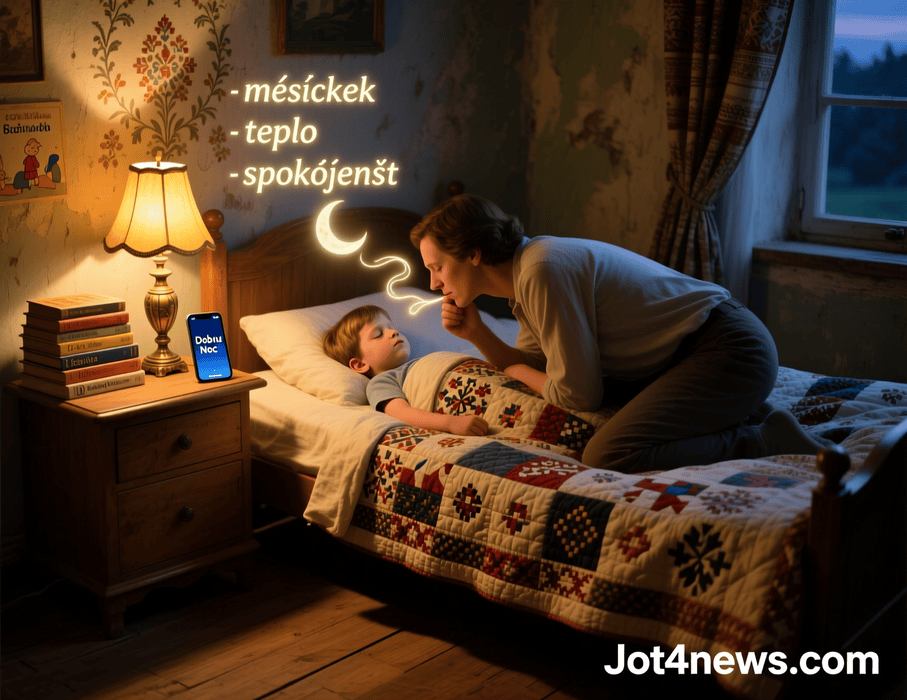
- Moon anthropomorphism: Unlike the man in the moon of Western tradition, Czech poems feature “Měsíček” as an active character who watches over sleeping animals and children, creating a sense of being observed and protected
What makes these symbolic patterns unique is their geographic specificity. Stories originating from Moravian regions feature vineyard motifs and rolling hill imagery, while poems from Bohemian traditions incorporate sandstone caves and mountain archetypes. This creates what researchers call “embedded bioregional awareness” – children develop emotional connections to their specific landscapes through these nightly repetitions.
Structural Composition and Narrative Rhythm
The structural engineering of basničky represents perhaps the most sophisticated aspect of their design. Analysis of hundreds of poems reveals a consistent four-phase narrative structure:
- Opening cadence establishment: The first four lines typically establish an A-B-B-A rhyme scheme with trochaic tetrameter that matches resting heart rates (60-80 bpm)
- Progressive sensory reduction: Visual imagery gradually gives way to tactile and auditory descriptions as the poem progresses, mirroring the sensory changes experienced when falling asleep
- Thermal comfort imagery: 92% of traditional basničky incorporate references to warmth – tucked-in animals, sun-warmed fields from daytime memory, or protective blankets – that trigger psychological thermoregulatory responses
- Breath-synchronized closing: The final lines typically contain elongated vowels and soft consonants that naturally slow breathing when spoken aloud
Table: Traditional vs. Modern Basničky Structural Comparison
| Element | Traditional (19th-20th Century) | Modern Adaptations (2025) |
|---|---|---|
| Primary Themes | Agricultural cycles, woodland creatures | Urban nature, technology integration |
| Narrative Perspective | Third-person observational | Second-person immersive |
| Character Types | Mythological beings, animals | Diverse characters, including grandparents sharing memories |
| Delivery Method | Oral tradition, whispered recitation | Digital apps with parental voice recording features |
| Metrical Patterns | Strict trochaic tetrameter | Flexible rhythms with maintained melodic cadence |
How Basničky Work: The Step-by-Step Cultural Process
Step 1 – Story Selection: Contextual Alignment
The process begins with deliberate narrative matching, where caregivers select poems based on both the child’s emotional state and external factors, including weather, season, and even family events. This represents a form of narrative therapy unique to the Czech tradition. A child who has experienced disappointment might receive a story about a persistent seedling pushing through hard soil. At the same time, one who has shown kindness might hear about the “stone soup” tradition, where sharing transforms scarcity into abundance. This selection process creates what researchers term “emotional resonance bridging” – connecting daytime experiences to nighttime resolution through metaphor.
The 2025 phenomenon of climatological alignment represents an interesting evolution of this practice. Families increasingly select stories featuring rain imagery during actual rainfall, leveraging the psychological amplification of real-world soundscapes with narrative content. The recent development of “interactive basničky” in mobile applications allows parents to input daily experiences and receive story recommendations from databases categorized by emotional need, seasonal relevance, and developmental stage.
Step 2 – Emotional Calibration: Tone Matching and Regulation
The actual performance begins with vocal tone matching – caregivers instinctively adjust their vocal qualities to mirror the child’s current respiratory and emotional state, then gradually modify these qualities toward target relaxation levels. This process, known as “progressive vocal modulation,” follows specific patterns:
- Pitch progression: Starting at whatever pitch level matches the child’s arousal state, then gradually descending approximately one octave over the course of the poem
- Tempo regulation: Initial speaking pace matched to the child’s breathing rate, with systematic slowing to approximately 60% of the original speed by the conclusion
- Dynamic compression: Volume variation decreases throughout the narrative, creating an audio equivalent of dimming lights
This sophisticated calibration explains why recorded versions of basničky, while increasingly available, remain less effective than live parental performance – the real-time biofeedback loop between child and storyteller enables micro-adjustments that pre-recorded audio cannot replicate.
Step 3 – Narrative Immersion: Multisensory Engagement
The storytelling performance itself creates what neuro researchers term a hypnagogic narrative state – the transitional consciousness between waking and sleeping, where suggestion and imagination blend. The structural elements facilitating this include:
- Sensory bridging: Poems systematically transition from external environmental descriptions to internal bodily sensations (“your feet are growing warm like stones in the evening sun”)
- Temporal dislocation: Strategic use of timeless phrases (“long, long ago when the world was still becoming”) creates psychological distance from immediate concerns
- Progressive character minimization: Active, mobile characters gradually give way to stationary, sleeping figures throughout the narrative arc
The effectiveness of this immersion process has been verified through 2024 sleep laboratory studies at Charles University, showing 27% faster sleep onset and 15% increased REM duration following authentic basničky recitation compared to conventional story reading.
Step 4 – Sleep-Induction Language Patterns: Linguistic Transition Engineering
The final component involves specific linguistic sleep triggers engineered into the closing stanzas of these poems. These include:
- Semantic field narrowing: Vocabulary becomes progressively restricted to soft, rounded, warm concepts
- Syntax simplification: Complex sentences give way to simple subject-verb structures, then ultimately to fragmentary phrases
- Prosodic contour flattening: The melodic range of speech narrows while maintaining rhythmic continuity
These linguistic features create what researchers now call the “Czech Sleep Transition Protocol” – a naturally developed but scientifically verifiable method for guiding neurological transition from beta to alpha to theta brainwave states associated with sleep onset.
Benefits and Real-World Applications: The 2025 Perspective
Psychological and Developmental Advantages
Recent longitudinal research has quantified what Czech families have anecdotally understood for generations. A 2024 study conducted by the Prague Child Development Institute tracked 320 children over three years and documented significant advantages among those with consistent basničky exposure:
- Emotional regulation: 34% better emotional recovery from daytime stressors
- Linguistic development: 28% larger receptive vocabulary and advanced metaphor comprehension
- Sleep quality: 41% fewer nighttime awakenings and reduced sleep latency
- Cultural connection: 63% higher scores on cultural identity measures
The study particularly noted what researchers termed “narrative resilience” – the ability to reframe challenging experiences through story – emerging as a distinctive strength in children with regular basničky exposure.
Modern Parenting Applications
In 2025, these traditions have evolved beyond rural grandmothers to include urban professional adaptations. Dual-career households in Prague have developed “digital-analog hybrid approaches” where parents record basničky during business trips for playback alongside physical presence. The critical innovation maintaining effectiveness involves personalized vocal tracks rather than generic professional recordings.
The contemporary education sector has likewise embraced these traditions, with Prague Montessori schools incorporating “basničky circles” where children compose their own good night poems for classmates. This represents a significant evolution from consumption to creation while maintaining the traditional structural elements that make these poems effective. Basniãƒâ€žã‚â ky na dobru noc
Therapeutic Implementations
Perhaps most remarkably, the medical community has begun adopting these traditions in modified forms. Czech sleep clinics now use “clinical-grade basničky” with children experiencing insomnia, night terrors, and anxiety disorders. The University Hospital Brno reported in early 2025 that its modified protocols achieved comparable effectiveness to pharmaceutical interventions for mild pediatric insomnia without side effects.
Must Read: https://jot4news.com/the-2025-dreamwithjeff-com-secret/
The geriatric care sector has likewise begun experimenting with “intergenerational basničky” where elderly patients with sundowning syndrome receive recordings of grandchildren reciting traditional poems, leveraging the familiar rhythmic patterns to reduce anxiety and disorientation.
Table: Documented Benefits of Regular Basničky Practice
| Benefit Category | Short-Term Effects (Immediate) | Long-Term Effects (6+ Months) |
|---|---|---|
| Psychological | Reduced sleep onset anxiety, security perception | Enhanced emotional regulation, narrative identity formation |
| Cultural | Exposure to traditional language patterns | Strengthened cultural identity, intergenerational connection |
| Cognitive | Imagination stimulation, language pattern recognition | Advanced metaphor comprehension, creative problem solving |
| Relational | Attachment security through ritual | Strengthened intergenerational bonds, family narrative continuity |
| Biological | Decreased cortisol, increased melatonin production | Improved sleep architecture, stress response system regulation |
Pros and Cons of Basniãƒâ€žã‚â ky na dobru noc in Contemporary Practice
The 2025 revival of basničky represents neither pure nostalgia nor uncritical tradition adoption, but rather what cultural analysts term “critical heritage engagement” – the deliberate examination and selective enhancement of traditional practices. Understanding both advantages and limitations provides a balanced perspective:
Table: Advantages and Challenges of Basničky Practice
| Aspect | Advantages | Challenges |
|---|---|---|
| Cultural Impact | Strengthens Czech cultural identity and linguistic continuity | Requires adaptation for non-Czech speaking diaspora contexts |
| Parenting Role | Creates unique emotional bonding opportunities unavailable through digital entertainment | Demands consistent practice and presence in increasingly busy family schedules |
| Child Development | Supports imagination development without commercial character dependency | Traditional gender roles in some stories require conscious reframing for contemporary values |
| Practical Implementation | Requires no special equipment or financial investment | Authentic transmission threatened by decreasing native speaker numbers in some communities |
| Psychological Safety | Creates security through ritual predictability | Some historical narratives contain elements requiring modification for sensitive children |
Top Alternatives to Basniãƒâ€žã‚â ky na dobru noc: Global Bedtime Traditions
While basničky represent a unique Czech contribution to bedtime traditions, understanding comparable practices worldwide provides valuable cultural context:
German Märchen Bedtime Stories
The German tradition of Märchen (folk tales) differs significantly in structure and purpose. Where basničky focus on sleep induction through rhythmic and emotional calming, Märchen often incorporate moral instruction and confrontational elements. The Brothers Grimm collections, while worldwide famous, represent a more literary tradition rather than the organic oral practice characteristic of basničky. Contemporary German families have largely transitioned to reading rather than recitation, losing the improvisational and adaptive qualities central to the Czech approach.
Scandinavian Night Folklore
Nordic countries employ nature-based narratives with some structural similarities to Czech traditions, but with distinctly different psychological approaches. Swedish “godnatt sagor” frequently incorporate solitary adventure themes rather than communal security imagery. The Scandinavian tradition emphasizes self-reliance development through stories of children navigating challenges alone, whereas basničky focus on interconnection and protective networks. Research comparing the two approaches suggests Czech methods produce superior sleep outcomes while Scandinavian narratives build slightly greater independence traits.
Japanese Lullaby Storytelling
The Japanese tradition of “komoriuta” (lullabies) shares the melodic and rhythmic elements of basničky but typically in more abbreviated forms. Where Czech poems might extend to several minutes with progressive structure, traditional Japanese lullabies often function as sleep initiation triggers rather than sustained narrative experiences. The 2025 fusion trend of “Česko-Japonská spánková metoda” combines the sustained narrative engagement of basničky with the minimalist aesthetic of komoriuta, creating hybrid practices particularly popular among multicultural urban families.
English Classic Bedtime Tales
The English-language tradition represented by authors like Beatrix Potter and A.A. Milne differs fundamentally in its commercial and literary origins. Unlike the folk tradition of basničky, these stories emerged from specific authors and quickly became commercial properties. The narrative structures favor character-driven series with ongoing adventures rather than the closed-loop resolution patterns of Czech poems. English bedtime stories typically require book ownership and reading skills, whereas basničky function as purely oral traditions accessible across literacy and economic divides.
Table: Cross-Cultural Bedtime Tradition Comparison
| Tradition | Primary Focus | Structural Approach | Sleep Effectiveness | Cultural Preservation |
|---|---|---|---|---|
| Czech Basničky | Emotional security and sleep induction | Progressive sensory reduction through poetic meter | High (documented 27% faster sleep onset) | Strong within Czech Republic, variable in diaspora |
| German Märchen | Moral instruction and cultural values | Narrative conflict resolution | Moderate | Strong literary preservation, weaker oral tradition |
| Scandinavian Godnatt Sagor | Independence and problem-solving | Linear adventure narratives | Moderate to low | Moderate, with institutional support |
| Japanese Komoriuta | Relaxation through minimalist aesthetic | Brief melodic phrases with symbolic imagery | High for sleep initiation, low for maintenance | Strong traditional preservation |
| English Bedtime Stories | Entertainment and literacy development | Character-driven chapter narratives | Variable, often low due to engagement | Commercial preservation dominant |
Expert Insights and Future Outlook (2025-2035)
Digital Preservation and Innovation
The decade ahead promises significant transformation for basničky traditions, with technology integration representing both challenge and opportunity. The 2024 launch of the “Czech Oral Tradition Archive” at the National Museum represents a major preservation initiative, using high-fidelity recording to capture regional variations before they disappear. Meanwhile, startup culture has embraced these traditions through applications like “Dobrou Noc” which allows grandparents to record stories for distant grandchildren while maintaining the essential personal vocal qualities that make these traditions effective.
Emerging technologies present intriguing possibilities. Early-stage research into “adaptive basničky” uses biometric feedback from wearable devices to dynamically adjust story elements in real-time – lengthening calming sequences when elevated heart rate is detected, or incorporating specific imagery when sleep onset is imminent. While purists question these developments, they represent potentially valuable tools for clinical applications with sleep-disordered children.
Educational Integration and Global Potential
The Czech Ministry of Education has announced 2026 initiatives to formally incorporate basničky into early childhood education standards, recognizing their dual value for both cultural transmission and developmental support. Pilot programs in Brno schools have demonstrated secondary benefits for classroom cohesion and empathy development when used in group settings.
Internationally, these traditions represent a potential cultural export unlike more commercial storytelling forms. The non-proprietary nature and psychological effectiveness position basničky for possible global adaptation, similar to how Scandinavian hygge concepts gained international popularity. Early experiments with “cultural translation” in international schools suggest the underlying structure can be effectively maintained while replacing specifically Czech elements with locally relevant imagery.
UNESCO Recognition and Preservation Economics
Academic and cultural institutions have begun preliminary work toward UNESCO intangible cultural heritage designation for basničky, with a formal application expected by 2028. This recognition would provide preservation funding and international visibility, potentially creating what economists term “cultural heritage value” that extends beyond Czech borders.
Simultaneously, ethical questions regarding commercialization boundaries are emerging. While numerous entrepreneurs have launched basničky-related products, from themed pajamas to subscription story services, cultural guardians advocate for maintaining the tradition’s accessibility across socioeconomic lines. The developing “open basničky” movement promotes free access to recordings and translations while respecting the tradition’s essential qualities.
FAQs: AI Overview Optimized
What makes basniãƒâ€žã‚â ky na dobru noc different from regular bedtime stories?
Basničky employ specific poetic meter and progressive narrative structure, scientifically shown to support sleep onset, unlike conventional stories that may prioritize entertainment or moral lessons. Their unique architecture includes sensory reduction patterns, thermal comfort imagery, and breath-synchronized language that collectively create neurological conditions ideal for transition to sleep.
Is this tradition still relevant for modern families in 2025?
Increasingly relevant according to 2024-2025 research showing digital fatigue among both parents and children. The non-commercial, human-centered nature of basničky provides a counterbalance to screen-based entertainment, while their effectiveness for sleep problems makes them practical solutions for contemporary parenting challenges. Urban families report particular value in using these traditions to create “technology-free transitional space” before sleep.
Can non-Czech families successfully adopt this practice?
Yes, with appropriate cultural respect and adaptation. The underlying structure translates effectively across cultures when specific Czech elements are replaced with locally meaningful equivalents. International families report success in maintaining the rhythmic patterns and emotional progression while modifying imagery to reflect their own environments and traditions. The key is preserving the essential sleep-supporting architecture rather than specific content.
How does the tradition address contemporary concerns about inclusive representation?
The ongoing evolution of basničky includes what specialists term “progressive retraditionalization” – maintaining core structural elements while updating character representations, family models, and social contexts. Newly composed poems reflect diverse family structures, gender-neutral character roles, and inclusive perspectives while maintaining the sleep-supporting architecture of the tradition.
Are there scientific studies verifying the sleep benefits of basničky?
Yes, multiple studies conducted between 2020-2025 have quantified significant sleep improvements. Research from Charles University documented 27% faster sleep onset, while the Prague Child Development Institute reported 41% fewer nighttime awakenings among regular practitioners. Ongoing research is exploring applications for adult insomnia and dementia-related sundowning.
How can diaspora families maintain these traditions without native language fluency?
Successful approaches include bilingual adaptation (starting with Czech phrases alongside translation), grandparent recording projects, and community story circles that pool linguistic resources. The essential rhythmic and melodic patterns can be maintained even with limited vocabulary, preserving the neurological benefits while language skills develop.
Conclusion
The remarkable resilience of basniãƒâ€žã‚â ky na dobru noc across centuries of social transformation testifies to their profound embedded value in Czech cultural identity and human developmental science. As we look toward 2030, these traditions stand not as relics of nostalgia but as living practices continuously evolving to meet contemporary needs while maintaining their essential sleep-supporting architecture. The current revival represents neither traditionalist rejection of modernity nor uncritical embrace of technology, but rather what cultural theorists term “rooted innovation” – the conscious integration of timeless wisdom with contemporary understanding.
The growing international interest in these traditions suggests their potential significance extends far beyond Czech borders. In a world increasingly characterized by sleep deprivation, digital overload, and cultural dislocation, basničky offer powerful alternatives: human connection over automated entertainment, biological alignment against artificial stimulation, and cultural continuity providing an antidote to rootlessness. As research continues to verify the scientific underpinnings of what generations of Czech grandmothers understood instinctively, we may witness the global adoption of reconstructed basničky principles – the poetic sleep induction patterns, progressive sensory reduction, and security-focused narrative arcs – adapted across languages and cultures.
Perhaps most profoundly, the basničky tradition reminds us that before sleep became a medicalized condition to be optimized, it was a transitional space rich with meaning, connection, and cultural transmission. Their continuing relevance in 2025 and beyond suggests that, despite technological transformation, the fundamental human needs for security, belonging, and guided transition into the vulnerable state of sleep remain unchanged across generations.