
Local news platforms such as aajkitajikhabar.com business are managing a tricky balancing act in the highly competitive digital media world. Alongside delivering quality journalism, local news platforms have to build a strong community base and generate sustainable revenue while still competing with the national media giants. While some sites manage to thrive, there are many others that struggle with problems that are not very visible, such as being overly dependent on ads, having limited audience insights, and content that does not connect with the audience. The difference between disappearing and being known as a local community leader is not so much in the headlines but rather in the less visible engagement signals. This guide delves into the data-driven community-focused strategies beyond the usual SEO and traffic gain that can convert a local news outlet from a mere bulletin board to a vibrant, community hub that is of great value for the locals.
What Is aajkitajikhabar.com Business and Why Does It Matter Today?
At its core, aajkitajikhabar.com business represents a modern evolution of local journalism tailored for the digital age. In aajkitajikhabar.com, the business department is an internet news portal targeting the general public with updates that it has since branched out into offering business intelligence, market trends, and entrepreneurial stories. The key factor that distinguishes the firm is its dedication to unraveling complicated issues, such as startup funding or the changes in the stock market, and making them understandable to everyone in a conversational manner, which students, professionals, and small business owners can equally grasp.
Its significance lies in its hybrid model. It operates as both a news service and a business ecosystem, offering practical value. The platform is an excellent tool for readers to acquire practical knowledge, while local entrepreneurs get access to a platform where they can gain visibility and expand. By focusing on the Indian business landscape, especially stories from tier-2 and tier-3 cities, it addresses the void that is very much there but is often ignored by big city-centric financial news that mainly covers the metros. Such a localized and user-focused approach turns the aajkitajikhabar.com business model into a convincing case study of being relevant and connected to the community.
The Real Challenges Local News Platforms Face Today
Publishing digitally, in this day and age, is next to impossible without having to face systemic issues that very often are beyond content creation. The recognition of problems is the first step in having a strong operation or bank of solutions in place for the upcoming hurdles.
- Revenue Dependency and Volatility: Most local websites are heavily dependent on display advertising, which is their main source of income, thus creating a risk factor of market crashes, advertiser cutbacks, and pressure to increase the number of pages viewed, which may compromise content quality and the user experience.
- Performance and Credibility Problems: In a time of misinformation, trust becomes the most valuable currency. Yet, at the same time, local teams that are already stretched may not have the required resources to perform fact-checking and also maintain their editorial standards. A single mistake in credibility may take down the whole trust that has been built over the years.
- The Black Box of Audience Engagement: A lot of publishers focus on surface-level metrics such as pageviews and bounce rates. These figures show what is going on, but they do not tell the reason behind it. Without the understanding of the deeper “why,” that means what motivates a reader to dedicate time, return, or share, content strategy remains a guess.
- Content and Community Fatigue: The continuous pursuit of clicks can make quality fall by the wayside, which leads to community-specific needs of content not being met. This creates a situation where an audience that is spoken to will feel that the conversation is not for them and thus will remain as passive consumers.
The Single Most Overlooked Metric That Changes Everything
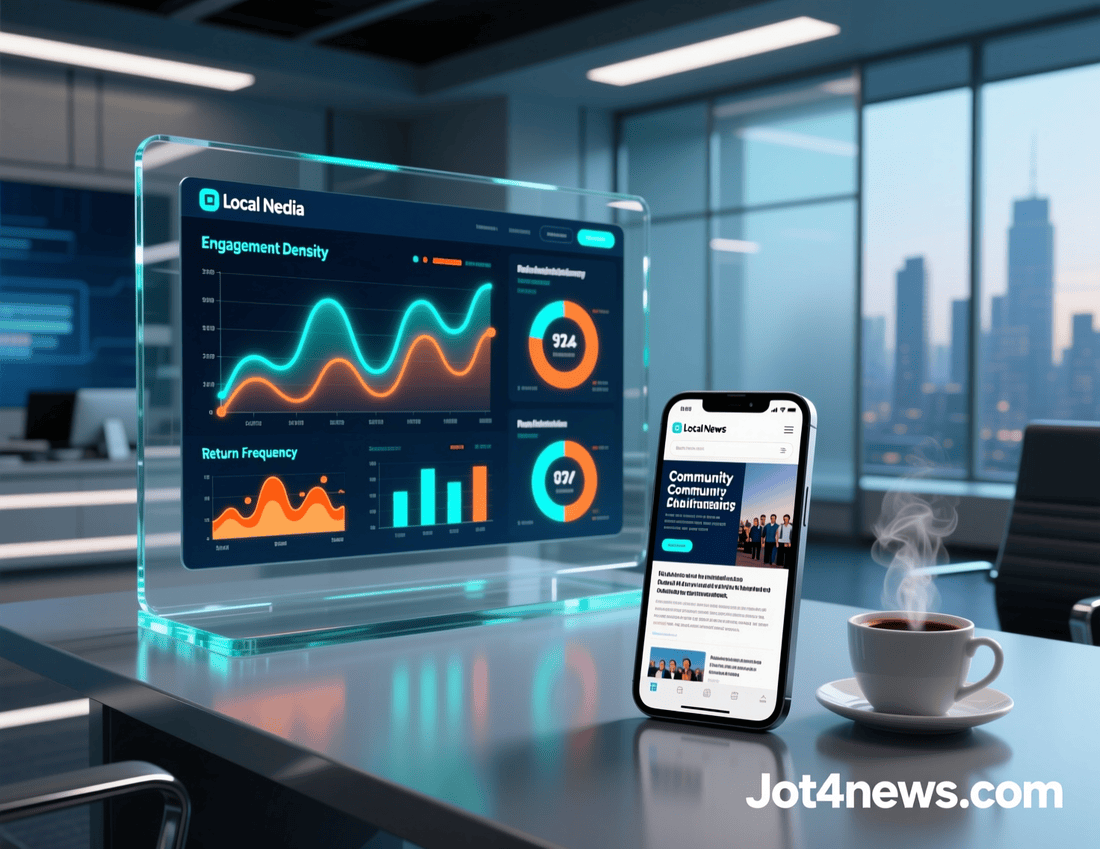
Moving beyond vanity metrics requires a shift in perspective. The key is to measure the quality of attention rather than just the quantity of visits. This is where the concept of an Engagement Density Score (EDS) becomes transformative.
EDS is a composite metric that synthesizes several deeper user behavior signals:
- Scroll Depth: Measures how much of an article is actually consumed, not just opened.
- Active Reading Time: Tracks time spent actively engaged with the content, excluding periods of inactivity.
- Return Frequency: Identifies how often a reader comes back within a specific period, indicating habit formation.
- Interaction Moments: Quantifies meaningful actions like sharing, commenting, or clicking on contextual internal links.
For a local publisher, EDS reveals which stories don’t just attract clicks, but truly capture attention and build connections. A high EDS on a feature about a local zoning issue, for example, signals deep community concern, guiding editors to pursue follow-ups. Conversely, a low EDS on a viral national story repost suggests the audience values original, local reporting more. This metric allows the aajkitajikhabar.com business to strategically allocate resources to content that fosters loyalty, which is far more valuable than traffic in the long term.
How aajkitajikhabar.com Business Can Use EDS to Convert Casual Readers into Loyal Subscribers
Armed with EDS insights, a local news operation can execute a precise strategy to deepen audience relationships.
Step 1: Audit and Optimize Content Layout
Analyze EDS data to identify layout patterns in high-scoring articles. Do they use more subheadings, bullet points, or pull quotes? Optimize all content to facilitate easier reading and comprehension, directly improving scroll depth and active time.
Step 2: Refine Headline and Introduction Strategy
Pair EDS with headline testing. A headline might garner clicks, but does the lead paragraph ensure readers continue? Use strong, contextual introductions that promise and deliver value, reducing early bounce rates.
Step 3: Implement Intelligent, Non-Intrusive Ad Placement
Use EDS to identify “engagement safe zones” areas where users are most immersed. Place native ads or sponsored content adjacent to these zones, not within them. This balances monetization needs with respect for the user experience, preserving trust.
Step 4: Double Down on High-EDS Topics
If deep-dive interviews with local entrepreneurs consistently yield high EDS, make them a regular franchise. This builds anticipation and habit, directly boosting return frequency. It signals to the audience that you are investing in what they truly care about.
Step 5: Foster Community Feedback Loops
Use high-EDS stories as conversation starters. Promptly respond to comments, ask follow-up questions in newsletters, and even invite high-EDS segment readers to contribute ideas or guest columns. This transforms passive consumption into a participatory relationship.
Also Read: https://jot4news.com/the-2025-dreamwithjeff-com-secret/
The 3 Metrics That Predict Viral Local Stories
While virality is often seen as luck, predictable patterns emerge when analyzing local success stories through a specialized lens.
- Emotional Relevance Factor (ERF): This measures the proximity of a story’s impact to the reader’s daily life. A 10% property tax increase (high ERF) will resonate more deeply than a 10% shift in a foreign stock index (low ERF). Tracking ERF helps prioritize hyper-local issues over generic national news.
- Local Trigger Score (LTS): Stories that tie into a known local event, anniversary, or ongoing debate have a higher LTS. For example, a business profile published during a city’s “Shop Local” week has built-in relevance and sharing potential.
- Community Feedback Loops: The initial velocity of comments and social shares within the first hour of publication is a powerful predictor. A story that immediately sparks conversation within local online groups is tapping into a pre-existing community sentiment and is likely to amplify.
Smart Ad Strategy for Local News Without Hurting User Experience
Monetization and user trust are not mutually exclusive. A smart strategy respects the audience while delivering value to advertisers.
- Adopt a Tiered, Value-Based Model: Move beyond generic banners. Offer packages like “Local Business Spotlight” (native article), “Community Event Partner” (sponsored section), and “Trusted Service Directory” (clearly marked listings). This provides clear value to small advertisers who struggle with digital marketing.
- Enforce Strict Labeling and Design Standards: All sponsored content must be visibly and consistently labeled. Use distinct borders, fonts, or tags. Transparency builds trust with readers and credibility with ethical advertisers.
- Leverage High-EDS Content for Premium Placements: Offer advertisers the opportunity to place native content adjacent to your best-performing, high-engagement stories. The quality environment enhances the advertiser’s brand by association and commands a higher rate.
- Utilize Direct-Sold Newsletter Sponsorships: A dedicated segment in a daily or weekly email digest delivers high-value attention from your most loyal readers. This is often more effective for local businesses than broad, programmatic display ads.
Comparison of Common Local News Ad Formats:
| Ad Format | User Experience Impact | Best For | Key Consideration |
|---|---|---|---|
| Programmatic Banners | High (intrusive) | Broad brand awareness | Use sparingly; implement frequency capping. |
| Native Sponsored Articles | Low (if clearly labeled) | Telling a brand’s local story | Must provide reader utility, not just promotion. |
| Newsletter Sponsorships | Very Low | Engaging loyal, opted-in readers | Offer analytics on open rates and clicks. |
| Community Event Partnerships | Positive (adds value) | Local services & retail | Integrate with event calendars for added visibility. |
The Future of Local Digital Media (Expert Prediction)
The next phase of growth will be driven by tools that leverage deep engagement data to create unparalleled relevance.
- Hyper-Localized AI Curation: Future tools will use EDS and behavioral data to dynamically personalize the homepage and newsletter for individual zip codes or neighborhoods, surfacing the most relevant council meetings, market updates, and school news.
- Real-Time Community Engagement Dashboards: Editors will move beyond traffic charts to live dashboards showing EDS heatmaps on articles, sentiment analysis in comments, and trending ERF topics across the community, allowing for real-time editorial pivots.
- Community-Driven Content Clusters: Platforms will evolve from linear article lists into interactive “topic clusters.” A story on a new infrastructure project will be automatically linked to past council votes, contractor profiles, resident interviews, and a feedback portal, creating a living resource rather than a static report.
Final Thoughts
Sustainable growth for a local news platform like aajkitajikhabar.com business is no longer just about chasing the next click. It is a deliberate strategy of building trust through utility and loyalty through relevance. By mastering deeper engagement signals like the Engagement Density Score and moving beyond superficial metrics, publishers can make informed decisions that resonate with their community’s core needs. This approach transforms a news site from a disposable information source into an essential civic infrastructure, a trusted hub where informed communities are built, and sustainable businesses can thrive. The future belongs not to the loudest headlines, but to the deepest connections.