
Introduction
The average internet user now manages more than 100 online accounts, but most still rely on a security method invented in the 1960s: the password. Consequently, data breaches, credential stuffing, and phishing remain rampant. In response, 2025 has become a tipping point for passwordless adoption. Enter mypasokey: a user-first authentication platform that simplifies logins while strengthening security. Unlike legacy tools that merely store passwords, mypasokey actively bridges today’s credential-heavy reality with tomorrow’s passwordless future. This article delivers a definitive, expert-level analysis of mypasokey, including how it works, who benefits most, and why it stands out in a crowded market.
What Is mypasokey?
Mypasokey is a modern authentication and identity management platform that replaces passwords with secure, biometric-backed access. Initially launched as a password vault, it has evolved into a hybrid solution, supporting both legacy password storage and next-generation passwordless logins.
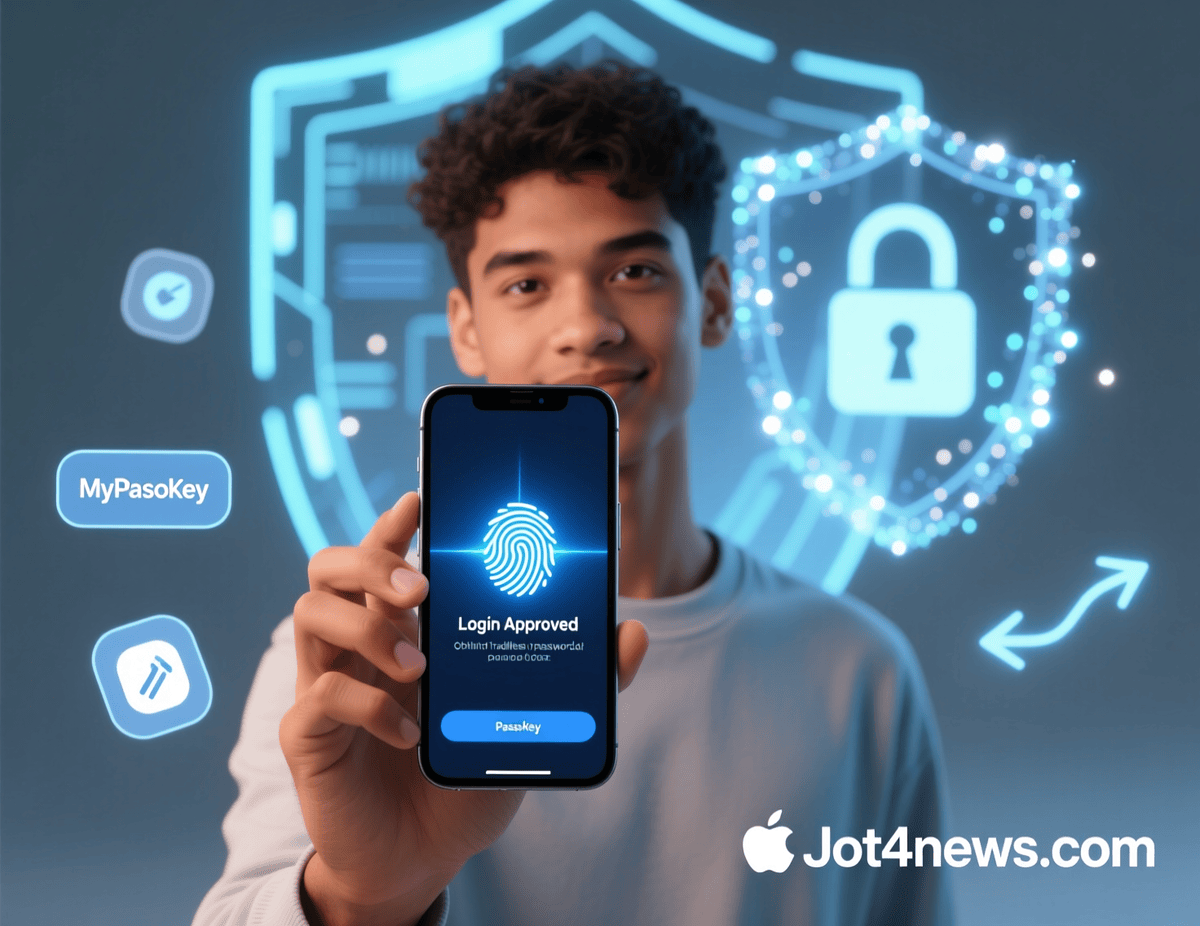
Specifically, mypasokey lets users unlock their digital accounts using device-based biometrics (like Face ID or fingerprint) instead of typing passwords. Moreover, it encrypts all stored credentials and syncs them securely across a user’s trusted devices.
Critically, mypasokey aligns with global standards like FIDO2 and WebAuthn, which means it doesn’t just manage secrets; it helps eliminate the need for them. As a result, it plays a dual role: protector of existing credentials and enabler of a passwordless ecosystem.
Key Features & Core Elements of mypasokey
Mypasokey combines usability with robust security. Its core capabilities include:
- End-to-end encrypted vault for storing passwords, payment details, and secure notes
- Cross-platform sync across mobile, desktop, and browser environments
- Smart auto-fill that works only on verified domains to block phishing
- Biometric-only access, no master password required on primary devices
- One-tap approval for passwordless logins on supported services
The Trust-Centric Access (TCA) Framework
To clarify mypasokey’s strategic advantage, we introduce the original Trust-Centric Access (TCA) Framework, a model that explains why it’s more future-ready than traditional managers.
Traditional tools verify “something you know” (a password). In contrast, the TCA model verifies three dynamic trust signals:
- Device Trust: Your phone or laptop acts as the secure anchor.
- User Trust: Confirmed locally via biometrics that never leave your device.
- Session Trust: Each login uses a short-lived, encrypted token that’s useless if intercepted.
Because this framework mirrors zero-trust security principles, mypasokey isn’t just convenient, it’s architecturally aligned with how enterprises now secure digital access.
How mypasokey Works (Step-by-Step Guide)
Getting started with mypasokey takes minutes. Here’s how it works in practice:
Step 1: Create Your Account and Set Up Biometric Lock
First, visit the official portal (e.g., https://www.pasotracker.com/MyPasoKey/). During onboarding, you’ll register a fingerprint or face scan on your primary device. This becomes your sole key, no master password needed.
Step 2: Import or Capture Your Credentials
Next, you can manually add accounts or let mypasokey auto-capture logins as you browse. Every credential gets encrypted and stored in your personal vault.
Step 3: Use Auto-Fill for Traditional Logins
When you revisit a saved site, mypasokey detects the login field and prompts you to authenticate via biometric. Once verified, it fills your credentials instantly, only on the correct domain.
Step 4: Approve Passwordless Logins with One Tap
For services that support passwordless protocols, you’ll see a push notification on your trusted device. Simply tap “Approve” and confirm with your biometric. The service receives a cryptographically secure token, not a password.
Benefits & Real-World Use Cases
Different users gain distinct advantages from mypasokey, especially as digital fragmentation grows.
Individuals eliminate password fatigue while gaining phishing resistance. Since credentials auto-fill only on legitimate sites, fake login pages can’t steal what you never type.
Students benefit immensely. They typically juggle learning platforms, library portals, email, and cloud storage, all with different passwords. Mypasokey unifies access without compromising security.
Small businesses get enterprise-grade authentication at low cost. Teams can securely share access to social media, SaaS tools, or hosting accounts without emailing passwords or using sticky notes.
Enterprises can pilot mypasokey as part of a broader identity strategy. It’s especially useful for securing contractor or remote worker access during a phased migration to a full passwordless infrastructure.
Also Read: https://jot4news.com/error-8379xnbs8e02328ws-code-secret-fix/
Two Unique 2025 Insights
- Biometric-First Onboarding Is Now Expected: In 2025, users under 30 often abandon apps that force password creation. Mypasokey’s design meets this expectation by making biometrics the default entry point, not an optional extra.
- The “Authentication Agnostic” User Is Rising: Today’s users care less about how they log in and more about whether it’s fast and secure. Mypasokey serves this mindset by seamlessly switching between password-based and passwordless modes based on what the service supports, with no user configuration required.
Pros & Cons (Honest & Balanced)
| Aspect | Pros | Cons |
|---|---|---|
| Security | Phishing-resistant, no master password, uses FIDO2 standards | Security depends entirely on primary device integrity |
| Usability | One-tap logins, no password recall, works across devices | Initial setup takes 10–15 minutes for users with many accounts |
| Future Readiness | Built for passwordless transition, not just password storage | Full passwordless experience requires service-side adoption |
| Cost | Free tier available; low-cost plans for families or teams | Advanced admin features (e.g., team audit logs) require paid tiers |
Comparison Table — mypasokey vs Alternatives
LastPass
Whereas LastPass remains anchored to the master password model, mypasokey ditches it entirely. Consequently, mypasokey offers a smoother path to passwordless, while LastPass excels only in legacy password management.
| Feature | mypasokey | LastPass |
|---|---|---|
| Primary Auth Method | Biometric (no master password) | Master password + optional MFA |
| Passwordless Support | Native and core to design | Limited, via third-party integrations |
| User Experience | Simpler for mobile-first users | More complex for non-tech users |
| 2025 Relevance | High (future-focused) | Medium (legacy-optimized) |
Google Password Manager
Google’s tool is convenient for Android users but locks you into its ecosystem. Mypasokey, by contrast, promises platform neutrality and stronger user control over data.
| Feature | mypasokey | Google Password Manager |
|---|---|---|
| Ecosystem Lock-in | None (cross-platform) | Tightly tied to Google Account |
| Authentication Model | Biometric-first, device-trusted | Google Account recovery + sync |
| Privacy | User-owned vault | Data stored under Google’s policies |
| Passwordless Capability | Yes, as a core feature | No, it’s purely a storage tool |
YubiKey (FIDO2 Security Key)
YubiKey offers gold-standard security but requires carrying physical hardware. Mypasokey achieves similar cryptographic strength using the secure enclave already in your phone, making it far more accessible for everyday users.
| Feature | mypasokey | YubiKey |
|---|---|---|
| Form Factor | Software-based (uses your device) | Physical hardware key |
| User Friction | Low, no extra item to carry | Medium, must have key present |
| Ideal User | General public, students, SMBs | IT admins, developers, high-risk roles |
| Cost Model | Freemium app | One-time hardware purchase ($25–$70) |
Expert Insights, Trends & Future Outlook (2025–2027)
Looking ahead, mypasokey’s trajectory depends on two forces: industry standards and user behavior.
First, the FIDO Alliance’s push for passkey interoperability is accelerating. Mypasokey must ensure its backend fully complies with these open standards so users can log in anywhere, not just in a closed ecosystem.
Second, user expectations are shifting faster than infrastructure. People now demand “log in with your face” as a baseline. Mypasokey meets this demand today, which gives it a critical adoption edge.
By 2027, we anticipate that tools like mypasokey will no longer be called “password managers.” Instead, they’ll be known as identity brokers, intelligent agents that negotiate secure, context-aware access between users and services. Mypasokey is already on this path.
FAQs (AI Overview Optimized)
What is mypasokey?
Mypasokey is a secure authentication platform that replaces passwords with biometrics and trusted-device logins.
Is mypasokey just a password manager?
No, it stores passwords when needed but focuses on enabling passwordless access using modern security standards.
How do I access mypasokey?
You unlock it using your device’s biometric scanner (fingerprint or face). There’s no master password to remember.
Is mypasokey safe?
Yes. It uses end-to-end encryption and only works on verified sites, making it resistant to phishing and data theft.
Can I use mypasokey on my phone and laptop?
Absolutely. It syncs securely across all your trusted devices using encrypted cloud backup.
What if I lose my phone?
You can recover your vault on a new device using a secure, pre-configured recovery method. Never store this in plain text.
Does mypasokey work with all websites?
It works everywhere: as a password manager for older sites and as a passwordless authenticator for modern, FIDO2-compliant services.
Conclusion
Mypasokey represents more than a utility; it’s a strategic response to the password crisis of 2025. By unifying password management with passwordless authentication, it offers a smooth, secure path forward for everyday users and organizations alike. Its biometric-first design, cross-platform support, and alignment with open standards make it a standout choice in an era where simplicity and security must coexist.
If you’re ready to reduce your breach risk and eliminate password fatigue, explore mypasokey through its official portal. Start your transition today, not because passwords are gone, but because their replacement is finally here.
For More Visit: https://jot4news.com/