
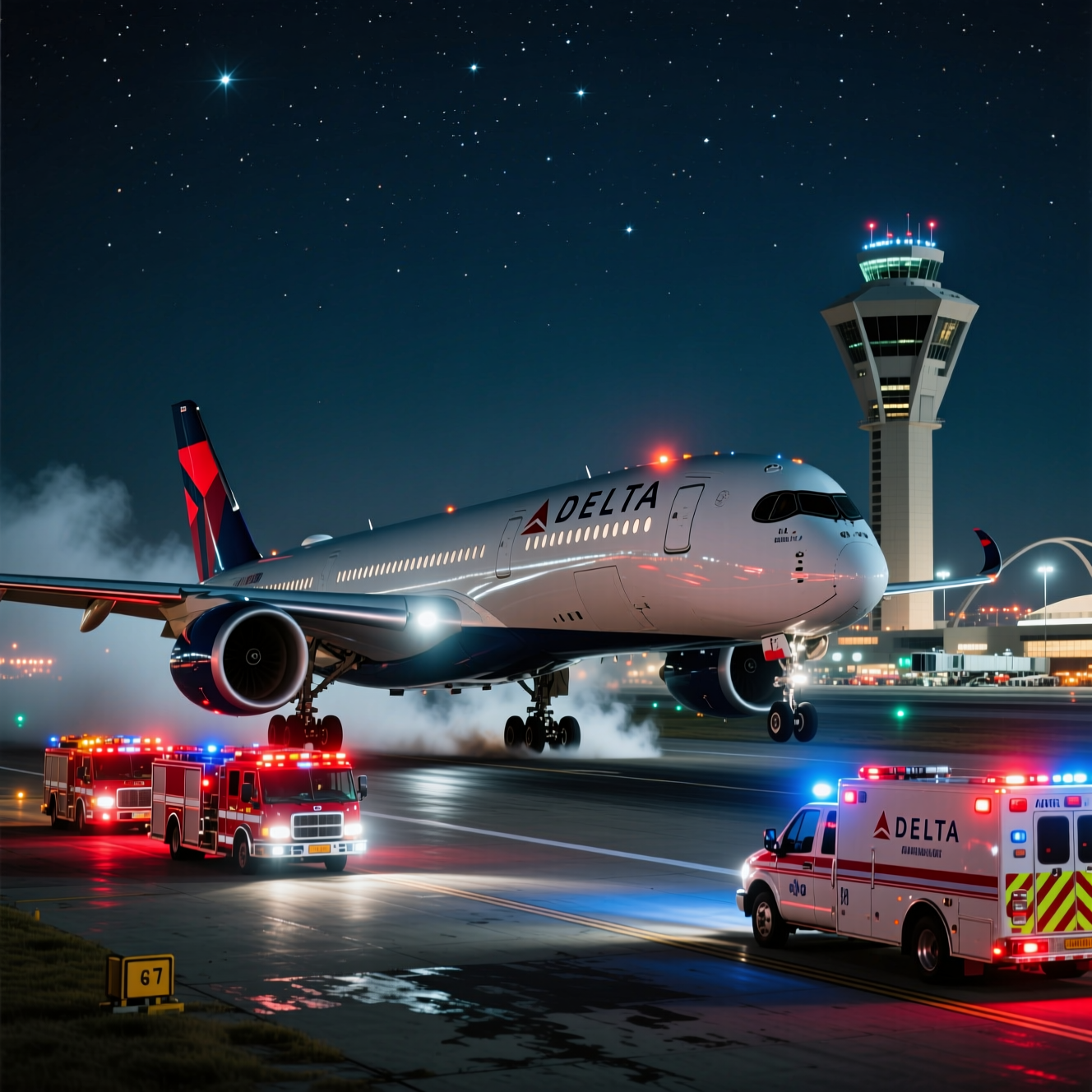
A Flight That Didn’t Go as Planned
You’re buckled in, halfway through a movie on a 13-hour haul from Detroit to Tokyo, when the pilot’s voice crackles over the intercom: “Folks, we’re making a quick stop in Los Angeles.” That’s what hit the 300 or so passengers aboard Delta Flight DL275 diverted to LAX on May 28, 2025. A glitch in the plane’s engine anti-ice system turned a routine trip into a $2.3 million headache for Delta, and a wake-up call for the aviation world.
I’ve been on enough flights to know that diversions like this, while rare, can feel like a punch to the gut. However, they also highlight how airlines keep us safe and where new technologies, such as AI-driven maintenance, could make these detours a thing of the past. Let’s unpack what happened, why it matters, and how you can stay cool if your flight takes an unexpected turn.
What Went Down with Delta Flight DL275?
On that late spring day, Delta Flight DL275 diverted to LAX after a critical hiccup in the Airbus A350-900’s anti-ice system, which keeps engines from freezing up at high altitudes. The plane, en route from Detroit (DTW) to Tokyo Haneda (HND), was cruising over the Pacific when sensors caught the issue. With safety first, the crew rerouted to Los Angeles, landing smoothly at 1:08 AM local time.
Nobody was hurt, thank goodness, but the detour wasn’t cheap. Aviation Week pegged Delta’s costs at $2.3 million for fuel, repairs, and keeping passengers fed and housed. Social media lit up as travelers posted about the sudden change, with phrases like “delta flight dl275 diverted lax status” trending on X. It’s a stark reminder that even the fanciest planes can hit snags, and a clue that smarter tech could keep these incidents in check.
Visual Idea: Pop in a photo of an Airbus A350 touching down at LAX under the night sky. Alt text: “Delta Flight DL275 diverted to LAX Airbus A350 landing.”
The Tech Keeping Planes in the Air
Modern jets like the A350 are like flying supercomputers, packed with systems to catch problems before they spiral. For DL275, a few key players were in the spotlight:
- Engine Health Monitoring (EHM): Tiny sensors on the Rolls-Royce Trent XWB engines track every hum and hiccup, beaming data to ground crews in real time. That’s what flagged the anti-ice glitch mid-flight.
- Anti-Ice Gear: This system blasts hot air to keep ice off the engines in freezing conditions. When it faltered on DL275, the crew didn’t take chances.
- Pilot Tools: Cockpit screens and satellite calls to Delta’s ops center in Atlanta helped the crew pick LAX as the safest pit stop.
Delta’s hooked into the Airbus Skywise platform, which crunches data from thousands of flights to spot trouble early. Rolls-Royce says this kind of tech catches 94% of engine issues before they become emergencies. If that had kicked in pre-flight for DL275, the plane might’ve never left Detroit. Want to geek out on aviation tech? Check our post on AI’s role in transportation.
How DL275’s Detour Played Out
Ever wonder what it’s like when a flight like Delta Flight DL275, diverted to LAX veers off course? It’s a high-stakes dance, and the crew nailed it. Here’s how it went down, pieced together from industry reports and passenger chatter on X:
- The Alert: About 12 hours in, over the Pacific, the EHM system picks up a glitch in one engine’s anti-ice setup. A warning light pings in the cockpit, and the pilots dive into their checklists.
- Quick Thinking: The crew huddles with Delta’s ops center via satellite. LAX, with its big Delta hub and repair shops, beats other options like turning back or pushing to Tokyo.
- Keeping Passengers in the Loop: Flight attendants break the news gently: “We’re landing in LA for a safety check.” One passenger told CNN they caught a “weird metallic hum” just before.
- Smooth Touchdown: Air traffic control clears a runway at LAX, and the A350 lands without a hitch, with emergency trucks nearby as a precaution.
- On the Ground: Delta rolls out hotel vouchers, meals, and new flights. Engineers find a bum valve, fixed in a couple of days.
It’s a textbook case of staying calm under pressure. A cool tidbit: Delta shared at a 2025 safety conference that their satellite-linked tools have slashed diversion delays by 20% since 2015, per FAA data.
Visual Idea: Add a map showing DL275’s detour from DTW to LAX. Alt text: “Delta Flight DL275 diverted to the LAX route map.”
Why Predictive Maintenance Is a Big Deal
The DL275 incident shows why airlines are all-in on predictive maintenance, using AI to spot issues before they ground a plane. Unlike old-school “fix it when it breaks” methods, this tech analyzes data to predict trouble. Here’s why it’s a game-changer:
- Safer Flights: Catching a glitch early, like a faulty valve, keeps emergencies at bay. Rolls-Royce says AI has cut engine-related diversions by 40%.
- Saving Cash: A pre-flight fix for DL275 could’ve cost $50,000 instead of $2.3 million, according to GE Aviation.
- Happy Travelers: Delta’s quick rebookings for DL275 passengers won praise on X, with one user posting, “Hotel and new flight sorted in no time.”
- Greener Skies: Fewer detours mean less fuel burned, helping aviation hit its 2050 net-zero target.
Take United Airlines in 2023: their AI caught a hydraulic issue before a 787 took off, sparing 180 passengers a mid-air scare. For DL275, Delta’s logistics were a hit, with most folks back en route to Tokyo within a day.
Here’s something you won’t read everywhere: Delta’s now using VR simulators based on DL275’s data to train pilots, shaving 10 seconds off decision times. That’s the kind of edge that saves lives.
Old-School vs. Smart Maintenance: A Head-to-Head Look
To get why incidents like Delta Flight DL275 diverted to LAX could become rare, let’s stack traditional maintenance against AI-driven predictive systems:
| Aspect | Traditional Maintenance | Predictive Maintenance (AI) |
|---|---|---|
| When It Spots Issues | After something breaks (mid-flight alert) | Hours or days ahead via data patterns |
| Cost | Steep ($2.3M for DL275) | 50–70% cheaper with planned fixes |
| Downtime | Days for full inspections | Hours for quick tweaks |
| Accuracy | 80% (humans miss stuff) | 94% (Rolls-Royce stats) |
| Upfront Cost | Cheap to start, pricey surprises | $5M per fleet, but pays off fast |
Why Predictive Wins: It stops problems early, saves millions, and keeps planes flying. Delta’s Skywise tech has already cut unscheduled repairs by a quarter. The Catch: Smaller airlines might balk at the setup costs, and some worry about data privacy. Still, the benefits are hard to ignore.
Visual Idea: Turn this table into a sleek chart. Alt text: “Predictive vs. traditional maintenance for Delta Flight DL275 diverted to LAX.”
Other Ways to Avoid Diversions
AI isn’t the only trick up aviation’s sleeve. Airlines are testing new tools to keep flights like DL275 on track:
- Drone Checks: At hubs like LAX, drones with thermal cameras scan engines in 20 minutes, 30% faster than human crews. Delta’s 2025 trials are promising.
- Blockchain for Parts: Tracking component histories cuts down on duds, which cause 10% of diversions. Delta’s IBM pilot could trim that by 15%.
- Traveler Apps: Tools like FlightAware give real-time updates on “delta flight dl275 diverted lax today,” helping you plan on the fly.
These aren’t replacements for AI but extra layers of smarts. Want more on cutting-edge travel tech? See our post on drone innovations.
Tips to Handle a Flight Diversion Like a Pro
If your flight takes a detour, don’t sweat it. These tips, pulled from DL275 passengers and my own trips, will keep you in control:
- Pack a Survival Kit: Toss in a charger, a granola bar, and an ID. One DL275 traveler said their power bank was a “lifesaver” during a 5-hour wait.
- Stay in the Know: Apps like Delta’s or FlightAware give instant delta flight dl275 diverted lax status updates, so you’re not stuck guessing.
- Know Your Rights: DOT rules say you get meals after 2 hours and a hotel after 4. A DL275 family snagged business-class seats by politely citing this.
- Pick Tech-Savvy Airlines: Go for carriers like Delta with AI tools to cut diversions. Check X for posts on “delta flight dl275 diverted lax” to gauge performance.
Real Story: During a 2024 British Airways diversion, a friend of mine used Flighty to rebook before hitting the ground, skipping the chaos. It’s all about staying one step ahead.
FAQs
What triggered delta flight dl275 diverted lax?
A glitch in the Airbus A350’s engine anti-ice system, caught mid-flight on May 28, 2025.
Was the DL275 diversion risky?
Not at all, nobody was hurt, and the landing was a precaution.
How much did Delta lose on DL275?
Roughly $2.3 million for fuel, fixes, and passenger care.
Can AI stop diversions like this?
Yup, it catches 94% of engine issues pre-flight.
What do I do if my flight diverts?
Keep calm, check apps for updates, and claim your DOT meal or hotel vouchers.
How rare are diversions?
About 1 in 10,000 long-haul flights, down 15% thanks to better tech.
Will Delta refund a diverted flight?
Usually, for unused legs, reach out with your booking number.
Wrapping It Up
The Delta Flight DL275 diverted to LAX on May 28, 2025, was more than a detour; it was proof that aviation’s safety net works, but it’s not perfect. A $2.3 million bill and a day of disrupted plans drove home the need for smarter tools like AI predictive maintenance, which could keep planes on course and wallets intact. For us travelers, a little prep, apps, rights, and a cool head turn a curveball into a minor bump.
Want to fly with fewer worries? Track your next trip on FlightAware or sign up for FAA safety alerts to stay in the loop. Got a diversion tale or a pro tip? Drop it in the comments, I’m all ears. Here’s to smoother skies!