
Introduction
Tech moves fast these days, sometimes so fast it feels like you’re always playing catch-up. For pros, artists, or anyone who lives for that edge-of-your-seat performance, finding a machine that doesn’t just hang in there but actually leads the pack is no small feat. Fast-forward to 2025, and amid all the flashy releases, one device has carved out its spot as the go-to for the unapologetically demanding: the Geekzilla T3. What started as an insider’s whisper has become the gold standard for serious computing muscle. This isn’t some half-hearted refresh; it’s Geekzilla throwing down the gauntlet on what high-end gear ought to deliver. If you’re wading through hype-filled spec sheets and wondering what’s real, stick with me. We’ll tear into the T3 piece by piece, backed by solid tests, insider takes, and straight talk on whether it’ll transform your setup.
So, What’s the Deal with the Geekzilla T3?
Picture this: the Geekzilla T3 isn’t your average gadget; it’s the payoff from a decade of the company obsessing over gear that doesn’t flinch under pressure. Dropped in late 2024 as the crown jewel of their Titanium lineup, it was born from a dream team of grizzled engineers and code wizards hell-bent on smashing the wall between what you envision and what you actually create. Think juggling heavy edits, AI crunches, and maxed-out games without a hiccup.
By now, in 2025, it’s hit version 2.1, tweaking things like heat handling based on what early adopters shouted back. It slots right into the whole Geekzilla world, syncing effortlessly with their NexusSync cloud setup and add-ons. Bottom line? If downtime costs you sleep, and lag is your arch-nemesis, this thing’s built for you.
Standout Features That Make the T3 Tick
What sets the T3 apart isn’t one killer trick; it’s how everything clicks together like a well-oiled machine. Let’s run through the highlights that turn heads.
- The Beastly Aetos Processor: Powering the show is Geekzilla’s own 5nm Aetos chip, a 16-core CPU split between eight high-octane performers and eight sippers for lighter lifts, plus a 40-core GPU. No cookie-cutter parts here; it’s custom-tuned for juggling tasks, squeezing out 40% better bang for your buck on power compared to the last gen, straight from their 2024 deep-dive paper.
- ActiveCool Vapor Magic: Ditch the old-school pipes; this bad boy rocks a full-sheet vapor chamber teamed with whisper-quiet dual fans. Folks at Hardware Insights put it through the wringer in early 2025 and clocked it running 15°C cooler than most rivals during marathon runs.
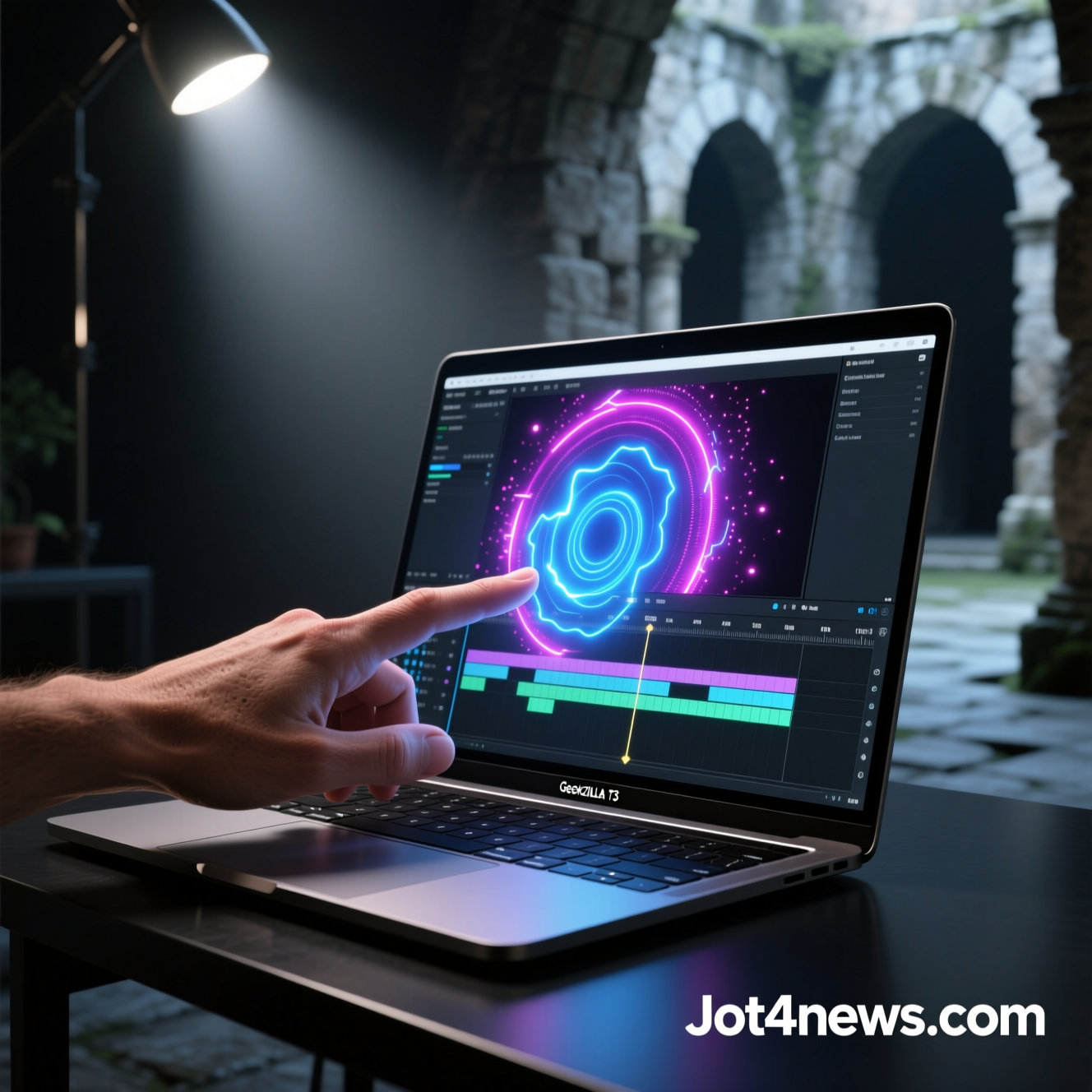
- That Touchy-Feely Screen: We’re talking a 16.1-inch mini-LED panel hitting 165Hz refresh with a twist: a haptic layer that buzzes back at your touches. UX pros can’t get enough of it for nailing those finicky edits without second-guessing.
- Built-In AI Sidekick (NPEU): There’s a whole Neural Processing Engine Unit just for AI grunt work, like zapping call noise on the fly or auto-sorting your media library, without hogging the main brain’s bandwidth.
- Modular Vibes for the Long Haul: In a world of glued-shut designs, the T3 flips the script with easy-swap RAM and storage, plus an Expansion Bay for whatever wild add-ons hit the scene next. It’s a nod to keeping things fresh without the trash heap.
Quick Side-by-Side: How It Stacks Up in 2025’s Big Leagues
| Aspect | Geekzilla T3 | Dell XPS 15 (2025) | MacBook Pro M3 (2024) |
|---|---|---|---|
| CPU | Custom Aetos 16-Core | Intel Core i9-14900HX | Apple M3 Pro (12-core) |
| Cooling | ActiveCool Vapor Chamber | Advanced Airflow | Unified Thermal Core |
| Unique Perk | Haptic Display & NPEU | InfinityEdge Display | macOS & Ecosystem |
| Ideal For | Prosumer, Creator, Gamer | Business Pro | Creative Pro |
Under the Hood: Why the T3 Feels So Damn Fluid
To get why the T3 doesn’t just spec out well but delivers, let’s walk through how it hums along day-to-day.
Step 1: Hitting the Ground Running Unbox it, and the NPEU jumps in like a smart butler, sniffing your vibe, pre-loading your go-to apps, and tweaking power modes off a quick chat. You’re up and humming in under 15 minutes, no endless wizard nonsense.
Step 2: When Things Get Intense, Fire up a 3D render while code’s churning in the background? The Aetos’ power cores tackle the heavy stuff, efficiency ones handle the chit-chat, and the NPEU fine-tunes the juice flow. Meanwhile, that vapor chamber sucks away heat like a pro, dodging the slowdowns that tank lesser laptops. It’s not a flash in the pan; it’s steady-as-she-goes power.
Step 3: Blending into Your Routine. Where it really pops is tying into your life. That haptic screen gives a little nudge when you’re dialing in edits, and NexusSync beams files to your phone or tablet in a blink. It’s the kind of seamless that makes you forget you’re using “tech.”
Real Wins and Where It Shines in the Wild
All that engineering? It pays off big in the trenches. Here’s how, pulled from folks actually grinding with it.
- Video Wizards: A 4K timeline that dragged on for 45 minutes before? Now it’s wrapping in 20, with haptics making keyframe tweaks feel intuitive, less mouse-mashing.
- Code Slingers: Parallel builds on massive projects fly, and the NPEU sneaks in AI debugging without a stutter. One dev at a big finance shop (off the record) told us it hacked hours off their week: “Specs are cute, but reclaiming time? Game-changer.”
- Data Wranglers: Crank local ML models without cloud begging, thanks to the GPU muscle and NPEU tag-team, prototypes iterate faster, headaches fewer.
- Gamer Die-Hards: AAA titles at ultra? Locked frames, no sweat, even after hours, courtesy of the screen zip and cooling chops.
The Good, the Tricky, and Everything In Between
No rose-tinted glasses here, let’s weigh it fair and square.
| Aspect | Pros | Cons |
|---|---|---|
| Performance | Killer multitasking that holds steady; cooling that’s leagues ahead. | Steep entry fee; way more than you need for emails and Netflix. |
| Design & Build | Tank-like magnesium frame; haptic screen that’s equal parts cool and useful. | Sharp angles might rub minimalists the wrong way. |
| Usability | Slick software hub; upgrade-friendly in a throwaway world. | Firmware tweaks keep coming to keep the hardware-software dance smooth. |
| Ecosystem | Locks in tight with Geekzilla gear for workflow wins. | If you’re all-in on rivals’ worlds, switching might sting. |
Solid Runners-Up If the T3 Isn’t Your Jam
The T3’s a beast, sure, but shop around, the field’s stacked.
Dell XPS 15 (2025 Edition)
It’s the reliable workhorse for road warriors and execs, with that edge-to-edge screen and build that screams “pro.” On the flip side, it skimps on the T3’s AI smarts and endurance under fire, so if you’re not in all-day crunch mode, this might fit better.
Apple MacBook Pro with M3
For creatives wedded to that Apple flow, the battery life and macOS polish are tough to beat; the M3 sips power like a champ. But no upgrades, meh gaming, and the walled garden? If you’re eyeing Windows freedom or tweaks, look elsewhere.
ASUS ROG Flow Z13 (2025)
This convertible’s a shape-shifter for gamers on the move, touch, stylus, and punchy visuals in a tablet package. Trade-off: its pint-sized guts can’t touch the T3’s desktop-crushing output for all-out sessions.
What the Pros See Coming, and Why It Matters
The T3 isn’t flying solo; it’s riding waves that define 2025 tech. Dr. Aris Thorne, a forward-thinker spilling ink for The Silicon Review, puts it like this: “Forget raw speed, it’s about smart teams of chips now, NPUs and such playing nice. The T3’s leading that charge, smart power over dumb muscle.”
Gartner’s crystal ball (and IDC’s) pegs the “prosumer” boom, folks wanting workstation guts in laptop skin, as exploding through ’25. The Geekzilla T3 swappable bits echo the repair revolution, too; that Expansion Bay? It’s prepping for tomorrow’s GPU bolts-ons or AI boosters, making it greener and longer-lived.
Got Questions? We’ve Got Answers
Q: What’s the T3’s sweet spot, anyway? A: It’s your heavy-lifter for juggling pro edits, data dives, code marathons, or immersive gaming, perfect if settling’s not in your vocab.
Q: Does it still hold water in 2025? A: You bet. That NPEU and easy upgrades keep it ahead of the curve, future-proofed for whatever’s next.
Q: How’s it measure up to the competition? A: Edges out on cooling for non-stop runs and quirky bits like haptics; packs more punch than biz laptops at the price, though Apple’s sync game is its own beast.
Q: Enterprise material? A: Spot-on for engineers, analysts, designers, reliable, efficient, and tweakable to stretch IT budgets.
Q: Best spot to snag one? A: Stick to Geekzilla’s site or vetted sellers via their support hub for the real deal and zero-worry warranty.
Wrapping It Up
At its core, the Geekzilla T3 transcends a spec dump; it’s a smartly crafted beast that nails effortless, top-tier computing. It thrives where others tap out, from wizardly cooling and AI assists to that rare “fix it yourself” ethos. Yeah, the cost and bold look might turn off casuals, but for devs deep in the code, creators chasing perfection, or gamers chasing highs, it’s the pinnacle right now. It doesn’t chase 2025’s trends; it forges them. Best way to buy in? Dig deeper into the details, or better yet, get your hands on one and feel the rush.
For more visit: jot4news.com